Glossary Of Basic Cooking Terms 3
English - (O - Z)
from Italian Traditional Food
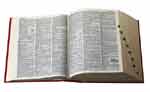
Useful glossary of basic cooking terms page 3 - (O - Z)
for Italian Traditional Food
Selection of more of page 3 of glossary of basic cooking terms 3 (O-Z) from
Italian Traditional Food to help you find your way around the mysteries of cooking. For
your convenience the glossary of basic cooking terms 3 (O-Z)
has been listed alphabetically. By understanding some of the glossary of basic cooking
terms 3 (O-Z) you will be able to better follow individual recipes. Also
visit the Articles, Articles 2, Articles 3, Articles 4, Articles
5, Articles 6, Articles 7, Cookbooks, Cookbooks 2, Cookbooks
3, Glossary, Glossary 2, Glossary 3, Glossary A-E, Glossary F-N, About Me, Italian Pantry Ingredients, FAQ, FAQ 2, FAQ 3, Links, Oven Temperatures, Measurement
Converter, Cooking Tips, and Recipes
pages.
More glossary of basic cooking terms on previous
page
Previous Page 6
Glossary of English basic cooking terms - (O - Z)
P
Parboil: To boil
until half-cooked, as with potatoes, before roasting.
Pasta: Paste of
flour and water cut into different shapes.
Pastry: Basic
mixture of flour, fat and water, with additions of butter, milk, sugar, egg yolk, cream to produce different types,
eg. shortcrust, flaky, puff, choux, croute (pie/bread crust).
Pate: Cooked
meat/game/fish mixture, well-seasoned, minced or pounded and served cold.
Patisserie: Pastry,
small cake, gateau.
Pectin: Substance
contained in some fruits and vegetables which acts as a setting agent for jams and jellies.
Pickle: Brine used
in preserving/salting meats. Also vegetables preserved in spiced vinegar.
Pith: White part of
citrus fruits between rind and flesh.
Poach: To cook
gently in trembling (not boiling) liquid.
Preserve: To cure,
smoke, can, freeze meats/fish/vegetables. Also fruits preserved with sugar to form jam or conserve.
Puree:
Fruit/vegetables/meat, usually pre-cooked, sieved/blended to a thick cream.
R
Ragout: Brown stew
cooked slowly without thickening unless it is an Irish (white) stew when potatoes are added.
Rare: Underdone,
"pink" when applied to roast or grilled meat.
Reduce: To boil down
sauce or any liquid to concentrate flavour and thicken the consistency.
Refresh: To pour
cold water over previously blanched and drained food.
Roast: To cook by
direct heat, eg. well basted with fat over an open flame, gas or electric spit.
Roux: Fat and flour
liaison (mixture). This is the basis of all flour sauces.
Rust: Underside of
ham or bacon rasher, on the side opposite the rind.
S
Saignant: Extremely
underdone so that the blood runs out when meat is cut.
Saute: To brown food
in butter or oil and butter.
Savoury: Small,
piquant dish, traditionally served as last course (to clean palate after sweet course in preparation for
port).
Scald: To plunge
into boiling water for easy peeling. Also to heat a liquid, eg. milk, to just under boiling point.
Sear: To seal in
valuable juices of foods, usually meat, by frying (browning) over fierce heat for a short time.
Seasoning: Salt and
pepper, also other flavourings.
Shortening: Fat,
which when worked into flour gives a "short" crisp quality to pastry/cakes.
Simmer: To cook in
liquid at 195F (91C) or just below boiling point so that bubbles occasionally break surface.
Skim: To remove
impurities(eg. fat or scum) from surfaces of sauces/soups/stocks. This is done when liquid has been gradually
brought to the boil.
Slake: To mix
arrowroot/cornflour with a little cold water before adding to a liquid for thickening.
Souse: To cover food
in wine vinegar and/or wine, and spices. Cook slowly and allow food to cool in the same liquid.
Steam: To cook
steadily in closed container over half-filled pan of steadily boiling water.
Stew: To cook
meat/vegetables/fish slowly in liquid in covered pan.
Stock: Liquid or
jelly made by simmering meat/bones/vegetables/fish for several hours. Used for making gravy,sauce/soup.
Sweat: To draw out
flavour by cooking diced or sliced vegetables gently in a little melted butter in covered pan until
softened.
Syrup: Sugar and
water boiled together to specified temperature. Used for stewing fruit. Also liquid derived from sugar cane:
treacle or golden syrup.
T
Tenderise: To break
down tough fibres in meat by heating or marinating.
Tisane:
Herb/camomile tea which is made by steeping fresh or dried herbs/flowers in hot water to extract
flavours.
Truss: To secure
legs/wings of poultry/game neatly with string/skeweres to facilitate carving.
V
Vol-au-vent: Case of
puff pastry filled with small pieces of cooked meat/poultry/shellfish in a thick sauce.
More glossary of basic cooking terms on previous
page
Previous Page 6
Trust that you found this glossary of basic
cooking terms 3 (O-P) helpful.
| 
 Digg
Digg Stumbleupon
 Google Bookmarks
 Delicious
 Twitter
 Facebook
 Yahoo My Web
 Reddit